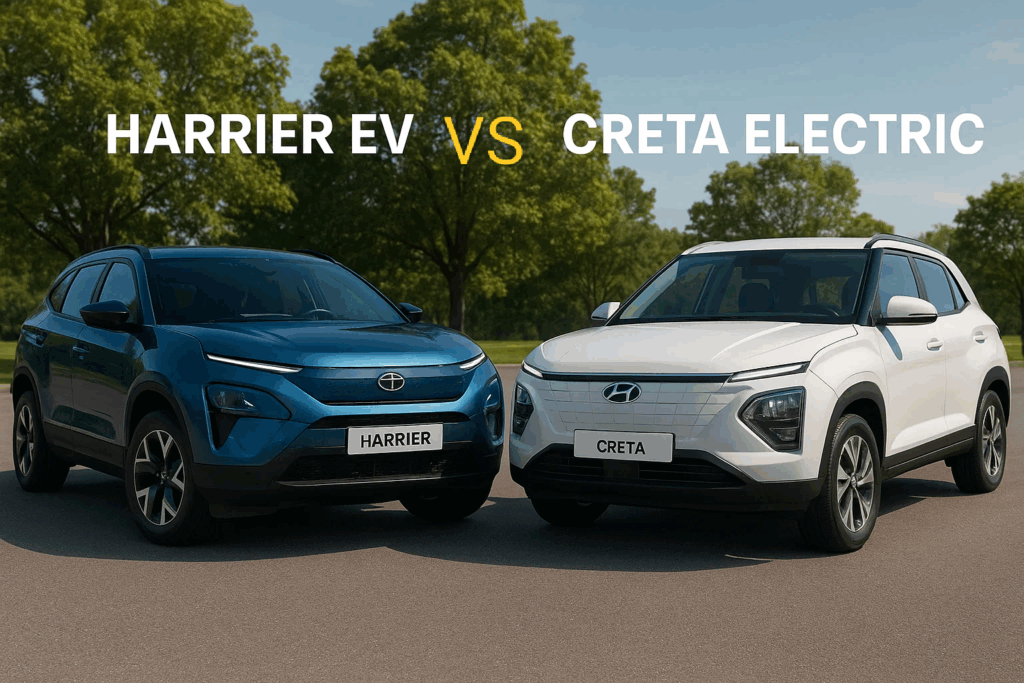
India is charging toward an electric future faster than ever before. As rising fuel prices, climate concerns, and government incentives push buyers toward sustainable alternatives, 2025 is shaping up to be a landmark year for electric vehicles. Among the most awaited launches are two power-packed electric SUVs: the Tata Harrier EV and the Hyundai Creta Electric.
With both automakers targeting the growing market of affordable electric SUVs under ₹25 lakhs in India, the competition is fierce, and consumer interest is soaring. But which one offers the better value for money, real-world range, performance, and overall features? Here’s a detailed comparison of the Tata Harrier EV and Hyundai Creta Electric to help you decide which EV you should buy in 2025.
Tata Harrier EV: India’s Flagship Electric SUV
Tata Motors has firmly established itself as a leader in India’s EV market. After the success of the Nexon EV and Tiago EV, Tata is now set to revolutionize the premium EV segment with the Tata Harrier EV.
Key Features of Tata Harrier EV:
- Estimated Price: ₹23-25 lakhs (ex-showroom)
- Battery Pack: ~60 kWh lithium-ion battery
- Range: 500+ km on a single charge (ARAI-tested)
- Charging Time: 10-80% in approx. 40 minutes with fast charging
- Drive Options: Likely to include All-Wheel Drive (AWD)
- Tech & Safety: 12.3-inch infotainment system, ADAS Level 2, wireless Apple CarPlay & Android Auto
Built on Tata’s new Sigma EV architecture, the Harrier EV promises to be more than just a conversion from an ICE vehicle. It features a ground-up EV-specific design that prioritizes performance, stability, and interior space.
Hyundai Creta Electric: The Popular SUV Goes Green
Hyundai’s Creta is already a household name in India. Now, the Korean automaker is leveraging this brand trust to enter the electric segment with the Hyundai Creta Electric 2025.
Key Features of Hyundai Creta Electric:
- Estimated Price: ₹22-24 lakhs (ex-showroom)
- Battery Pack: ~45-50 kWh lithium-ion battery
- Range: 400-450 km (expected)
- Charging Time: Fast charging compatible with CCS2
- Platform: Modified ICE platform to support electric drivetrain
- Tech & Safety: Dual-screen cockpit, Hyundai SmartSense safety suite, ventilated seats, connected car tech
While it may not be built on a dedicated EV platform like the Harrier, the Hyundai Creta Electric focuses on practicality, comfort, and tried-and-tested performance in urban and semi-urban conditions.
Tata Harrier EV vs Hyundai Creta Electric: Detailed Comparison
| Feature | Tata Harrier EV | Hyundai Creta Electric |
|---|---|---|
| Battery Capacity | ~60 kWh | ~45-50 kWh |
| Estimated Range | 500+ km | 400-450 km |
| Fast Charging Support | Yes (up to 150 kW) | Yes (likely 100 kW) |
| Platform | Sigma (Dedicated EV Platform) | Modified ICE Platform |
| Drivetrain | FWD & AWD expected | FWD expected |
| Infotainment | 12.3-inch Touchscreen, JBL Audio | Dual-display setup, Premium Audio |
| ADAS | Level 2 ADAS | Hyundai SmartSense |
| Price (Estimated) | ₹23-25 Lakhs | ₹22-24 Lakhs |
| Interior Features | Panoramic sunroof, wireless charging | Ventilated seats, ambient lighting |
What the Experts Say
According to Autocar India, the Tata Harrier EV is a “game-changer” that combines rugged SUV design with futuristic electric performance. Its new Sigma architecture allows for a better layout, enhanced safety, and improved battery efficiency.
Meanwhile, ZigWheels suggests that while the Hyundai Creta Electric may not be revolutionary in terms of architecture, it delivers on what Hyundai does best: comfort, dependability, and a feature-rich experience tailored to Indian buyers.
Why the Harrier EV Might Be the Better Choice for Long-Distance Drivers
If your daily commute or road trips regularly cross 300+ km, the longer range of the Tata Harrier EV is a big advantage. Coupled with fast-charging capabilities and likely all-wheel drive, it’s built for those who need more power and flexibility.
Top Advantages of Tata Harrier EV:
- Larger battery with longer range
- Dedicated EV platform = better space and performance
- Rugged SUV styling with AWD option
- Likely better off-road capability
Why the Hyundai Creta Electric Is Ideal for Urban Commuters
On the other hand, the Hyundai Creta Electric is perfect for city drivers who want a trusted name, compact size, and premium feel. It promises an easier transition from ICE to EV for existing Creta users.
Top Advantages of Hyundai Creta Electric:
- Familiar design with EV tech infusion
- More affordable by ₹1 lakh (estimated)
- Superior comfort for city driving
- Hyundai’s widespread service network
FAQs – People Also Ask
Q1. What is the range of Tata Harrier EV vs Hyundai Creta Electric?
Tata Harrier EV is expected to offer over 500 km range, while Hyundai Creta Electric may deliver 400–450 km.
Q2. Which electric SUV is better for long drives?
The Tata Harrier EV, with a larger battery and potential AWD, is better suited for long-distance driving.
Q3. Are both EVs fast charging compatible?
Yes, both support fast charging. Harrier EV may offer faster DC charging up to 150 kW.
Q4. Which is more affordable: Harrier EV or Creta Electric?
Hyundai Creta Electric is expected to be slightly more affordable by up to ₹1 lakh.
Final Verdict: Which EV Should You Buy in 2025?
Choosing between the Tata Harrier EV and Hyundai Creta Electric comes down to your personal preferences and driving habits. If you want a longer range, off-road capability, and a bold EV-specific design, the Harrier EV is the way to go. However, if you prefer a city-friendly, feature-rich, and slightly more affordable EV from a brand known for comfort and reliability, the Creta Electric won’t disappoint.
No matter your choice, one thing is clear: 2025 will be the year India fully embraces electric SUVs.