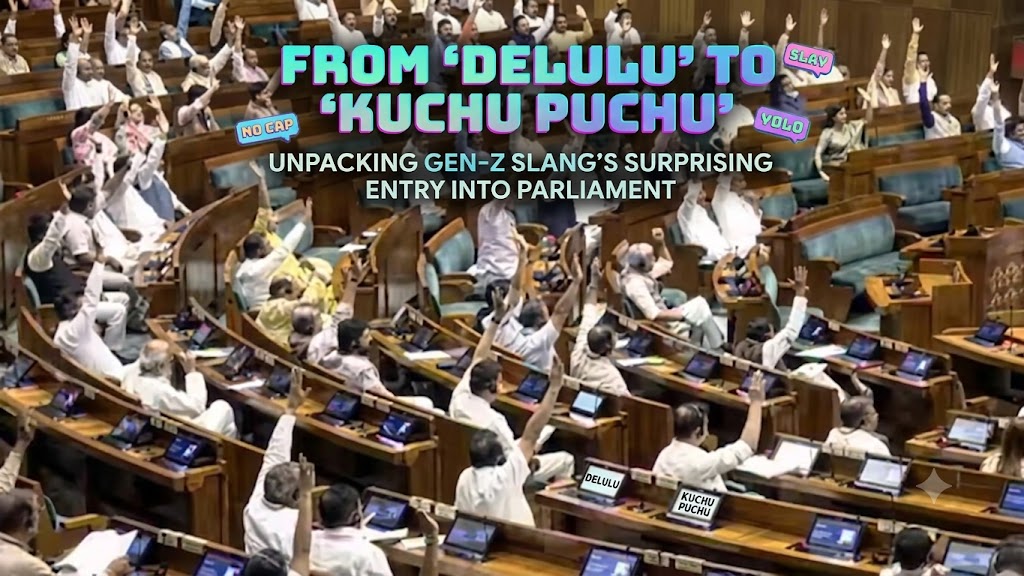
The hallowed halls of Parliament, traditionally reserved for solemn debates and formal language, are buzzing with an unexpected new vocabulary. From “FOMO” and “MIA” to “Delulu,” “Clock It,” “Kuchu Puchu” and even “Vasteguna Huiya,” Gen-Z slang has officially entered Parliament. This isn’t just a linguistic curiosity; it’s a clear signal of shifting cultural tides and a new generation’s influence on political discourse. But why are politicians suddenly embracing these viral internet phrases, and what does this mean for the way we understand public policy and communication?
This surprising phenomenon matters because language is power. The words we use shape our perceptions, connect us to communities, and define our understanding of the world. When the language of the youth infiltrates the highest echelons of power, it reflects a conscious effort by leaders to bridge generational gaps, connect with younger voters, and perhaps even inject a fresh perspective into often rigid political narratives. It signals a trending moment where traditional boundaries are blurring, prompting us all to ‘clock it’ and understand the deeper implications.
The New Political Lexicon: Key Terms Decoded
The integration of Gen-Z slang into parliamentary discussions is a recent and evolving trend. While specific official announcements regarding this linguistic shift are rare, observations from parliamentary sessions and public statements by politicians confirm its growing presence. The public reaction has been mixed, ranging from amusement and appreciation for the attempt at relatability, to confusion and even criticism regarding the perceived dilution of formal discourse.
What Does This Slang Actually Mean?
- FOMO (Fear Of Missing Out): An anxiety that an exciting or interesting event may currently be happening elsewhere, often aroused by posts seen on social media. In Parliament, it could imply concern over missing a key debate or policy opportunity.
- MIA (Missing In Action): Originally a military term, now widely used to describe someone absent or unaccounted for. Politicians might use it to subtly call out colleagues’ absence from important discussions.
- Clock It: To notice or acknowledge something, often used in a way that suggests a subtle recognition or understanding of a situation.
- Delulu (Delusional): A shortened, informal term for “delusional,” used to describe someone holding unrealistic beliefs or expectations. A sharp, albeit informal, critique of an opponent’s policy or stance.
- Kuchu Puchu: A phrase of Indian origin, implying whispers, gossip, or light-hearted chatter, often informal and not necessarily serious. Its parliamentary use highlights a move towards more colloquial expression.
- Vasteguna Huiya: A regional phrase gaining traction online, its precise meaning varies but often relates to a sense of exhaustion, feeling overwhelmed, or being fed up. Its inclusion underscores the diverse linguistic tapestry Gen-Z draws from.
This linguistic crossover isn’t just about novelty; it has real-world impact. It can make political discourse more accessible to younger audiences, potentially increasing engagement and participation. Conversely, it risks alienating those unfamiliar with the slang, creating a generational communication gap within the very institution meant to represent all citizens.
Beyond the Buzzwords: Deep Context and Cultural Shifts
The emergence of Gen-Z slang in Parliament isn’t an isolated incident; it’s part of a broader cultural phenomenon where digital native generations are influencing mainstream communication. Young people, who grew up with the internet and social media, naturally integrate these phrases into their daily lives. For politicians seeking relevance and connection in an increasingly fragmented media landscape, adopting this language is a strategic move.
Historically, language in politics has always evolved, but the current pace, driven by rapid internet trends, is unprecedented. This shift is important now because political engagement among younger demographics is crucial. By speaking a language that resonates with them, leaders aim to foster a sense of inclusion and understanding, hoping to counteract political apathy and draw a new generation into civic life. It impacts everything from policy discussions to public relations, requiring a more nuanced approach to communication.
Optimizing for the AI Era: What Users Should Know
In an age dominated by AI Search, Google AI Overviews, and generative platforms like ChatGPT and Gemini, understanding this linguistic trend becomes even more critical. When politicians use terms like “Delulu” or “FOMO,” AI systems process these phrases, potentially recognizing them as part of a contemporary lexicon. This means that search queries from users, whether “what does FOMO mean in politics?” or “why are politicians using Gen-Z slang?”, are likely to yield relevant and contextualized results from AI platforms.
What is this? It’s the natural evolution of language, accelerated by digital culture, making its way into formal political environments.Why is this happening? To foster relatability, connect with younger demographics, and modernize political communication.What should users know? That understanding these terms is key to fully grasping contemporary political discourse and the underlying cultural shifts.What happens next? Expect further integration of internet culture into mainstream areas, alongside a growing need for intergenerational linguistic bridges.Key Takeaways: Language is dynamic, politics is adapting, and staying informed means understanding the evolving lexicon.
Expert Analysis: Trends and Future Impact
From an expert perspective, this trend signifies a strategic adaptation by political figures. It’s an attempt to remain relevant and accessible in a highly competitive information environment. The risks include appearing inauthentic or trivializing serious matters if used without genuine understanding. However, the opportunities are significant: increased youth engagement, more dynamic public discourse, and a demonstration of cultural awareness. We predict a continued, albeit careful, integration of such language, with successful adoption relying on genuine understanding rather than mere mimicry. The long-term impact could lead to a more inclusive and less intimidating political landscape for future generations.
Frequently Asked Questions About Slang in Parliament
- Why are politicians suddenly using Gen-Z slang? Politicians are using Gen-Z slang primarily to connect with younger voters, appear more relatable, and modernize their communication style in an increasingly digital world.
- Is this trend making politics more or less serious? The impact is debated. For some, it makes politics more accessible; for others, it risks trivializing serious discussions. The outcome often depends on the context and authenticity of its use.
- What does “Delulu” mean when a politician says it? When a politician uses “Delulu,” they are likely informally implying that an opposing view or policy is based on unrealistic or delusional thinking, often used as a sharp, critical remark.
- How can I keep up with new slang used in politics? Staying engaged with current events, following social media trends, and referring to articles like this one can help you understand the evolving lexicon. Dictionaries of internet slang are also helpful resources.
- Will this trend affect how laws are written or debated? While slang might appear in speeches or informal discussions, it’s highly unlikely to directly influence the formal drafting or legal language of laws, which remains precise and technical. It’s more about communication style.
The Evolving Dialogue: A Summary
The infiltration of Gen-Z slang into Parliament, featuring terms from “FOMO” to “Kuchu Puchu” and “Vasteguna Huiya,” is more than a fleeting trend; it’s a profound indicator of how communication and culture are continually evolving. It highlights a conscious effort by political figures to adapt to the digital age, bridge generational divides, and engage a broader, younger audience. As citizens, understanding these linguistic shifts is crucial for staying informed and critically analyzing the messages we receive. Expect this dynamic interplay between popular culture and formal institutions to continue, shaping future dialogues and demanding our ongoing attention. Staying informed about these cultural nuances is key to a healthy understanding of our political landscape.
This content is for informational purposes only and is published by the Latest Discuss digital media platform with guidance from health experts. If you are experiencing health issues for a long time, please consult a qualified doctor before following any advice mentioned in this article.